Field notes
Where green sea turtles meet the Florida Keys
A habitat-first way to use SeaLifeWiki when looking for green sea turtles in the shallow waters of the Keys.
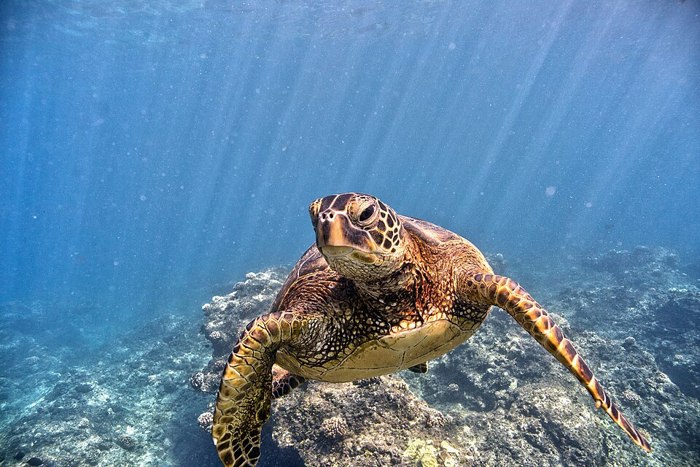
Photo: John Burns / NOAA · Public domain (U.S. government) · Source and license. Displayed as a resized crop. Photograph illustrates the species.
Shallow water shapes the search
Green sea turtles use seagrass meadows, coral reefs, and sheltered coastal bays. Juveniles can also spend part of their lives in the open ocean, but shallow feeding grounds provide the most useful starting point for a visitor exploring the Florida Keys.
That habitat pattern matters more than any single marker. A map record shows that someone documented the species within an area. It does not show where a turtle is now, and it does not turn a recorded location into a guaranteed viewing site.
Start with the destination
Open the Florida Keys map and scan the species list for green sea turtle. The map combines a dated regional snapshot with live occurrence queries. Moving the map or searching another place updates the nearby destinations of interest without interrupting the map itself.
Use the snorkeling or scuba-diving filter to narrow the list to animals associated with that activity. The filter describes useful viewing context; it does not rate a particular operator, reef, or access point.
Then read the species
The green sea turtle profile separates species-level habitat information from depths and habitats found in retrieved destination records. That distinction helps when local occurrence records contain little environmental detail.
The destination cards below the profile show the places where SeaLifeWiki finds matching records. Each card links back to the map at that destination, making it possible to move from a species question to a place-based search.
Observe without changing the encounter
If you encounter a turtle, leave room for it to swim and surface. Do not approach, pursue, touch, feed, or block its path. A quiet observation protects the animal and usually provides a better view of its natural behavior.
Conditions, visibility, survey effort, season, and chance all affect what a visitor may see. Use SeaLifeWiki as a field guide for deciding what to learn about next, not as a promise that a species will appear.