
Why Your Dive Mask Fogs—and What Makes It Clear Again
When a cloudy veil forms inside your mask, watch whether it breaks into tiny beads or smooths into a clear film—the pattern reveals what is scattering your view.
Read article → SeaLifeWiki
SEALIFEWIKI ARTICLES
The lives of marine animals, the places they inhabit, and the science behind what you see in the water.
When a cloudy veil forms inside your mask, watch whether it breaks into tiny beads or smooths into a clear film—the pattern reveals what is scattering your view.
Read article →
When a sleek marine mammal passes underwater, look behind the eye for an ear flap and watch which pair of flippers drives the next stroke.
Read article →
At a Caribbean sand burrow, watch for a yellowhead jawfish whose cheeks stay full and whose open mouth reveals a clustered egg mass—the male is brooding the next generation.
Read article →
At 1,773 metres near Darwin Island, follow a tiny blue octopus's squat body and short arms—the visible clues began an eleven-year journey from ROV footage to a species name.
Read article →
In Palau's Jellyfish Lake, look for golden jellies gathered beside moving bands of sun and shade—but verify current conditions, because the bloom can shrink or disappear.
Read article →
Watch a garden-eel colony lean into moving water, then shorten or vanish: each fish stays anchored to a burrow while reaching for drifting plankton.
Read article →
At one anemone, compare the largest orange clownfish with the next fish and the smaller residents: the descending sizes reveal a social queue.
Read article →
Scan the Canary Islands' sand–reef boundary for paired spiracles, fin tips and a faint outline—the patch that looks like a ray may be a buried angelshark.
Read article →
Watch the shrimp's long antenna reach toward the goby at a sandy burrow: that touch connects an excavator with a lookout.
Read article →
Beside an ROV camera at 2,614 metres, follow a transparent hood to a foot and fingered tail: this jelly-like swimmer is a sea slug, not a jellyfish.
Read article →
Look for pink branches among pale seabed fragments in western Scotland: the living surface and the gaps beneath it make a habitat worth keeping clear of your fins.
Read article →
Look for the rippled living tissue spilling beyond a giant clam’s shell: its bright surface helps manage sunlight for algae hidden inside.
Read article →
Watch a familiar piece of your own gear before judging a fish: a flat dive mask changes the light reaching your eyes, but its magnification is not a reliable ruler.
Read article →
Start where each arm meets the body: a broad arm blending into the center, a sharp joint, or repeated branching can separate three star-shaped animals before color misleads you.
Read article →
Follow a seahorse’s tail around its perch: the curl anchors an armored body, while a quick head pivot can turn that still position into a feeding strike.
Read article →
At Palau's outer reef corners, current, promontory shape and returning grey reef sharks meet—but moving water is a clue to read, not a sighting guarantee.
Read article →
At 1,233 metres, a borehole camera found stalked animals clinging to one dark rock beneath 872 metres of Antarctic ice—where the current made their food supply the real puzzle.
Read article →
Watch a small pufferfish dig straight grooves toward the centre of a two-metre sand circle: repeated short runs turn a flat seabed into a spawning nest.
Read article →
Look for colored living tissue across the branches after unusually warm water: in the northern Gulf of Aqaba, that visible continuity can persist through heat that bleaches corals elsewhere.
Read article →
Look from an aeolid nudibranch’s finger-like back projections to its prey: some of those tips hold stinging capsules acquired through feeding, rather than made by the slug.
Read article →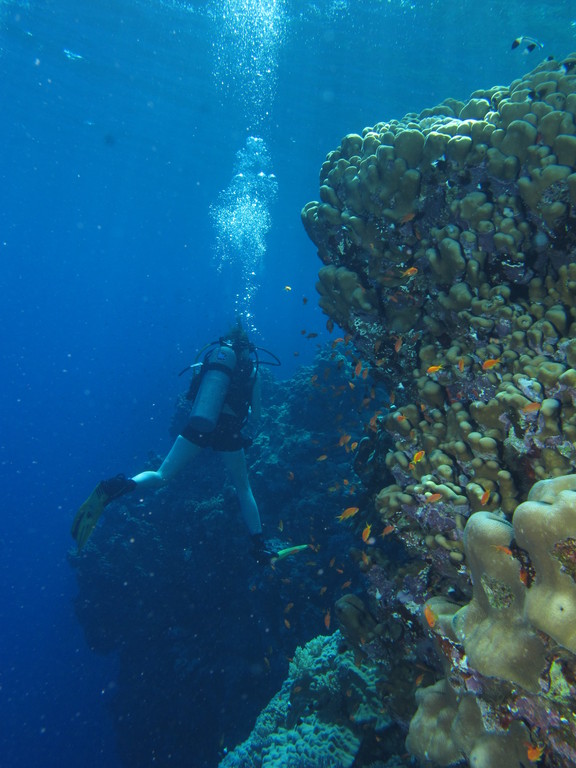
If sand rises behind your fins while your depth stays steady, check your body angle and the water your kick sends toward the bottom—not just whether you are sinking.
Read article →
A banded body can belong to a sea krait or a snake eel; follow it to the tail and look for fins before trusting the stripes.
Read article →
Watch a trumpetfish lock its long body beside a queen parrotfish or Spanish hogfish: matching a travelling partner can make the predator less conspicuous to wary damselfish.
Read article →
At 6,670 metres in the Mariana Trench, a pale snailfish cruises head-down over the sediment—a visible path that a 2026 study turned into the first three-dimensional measurements of its swimming.
Read article →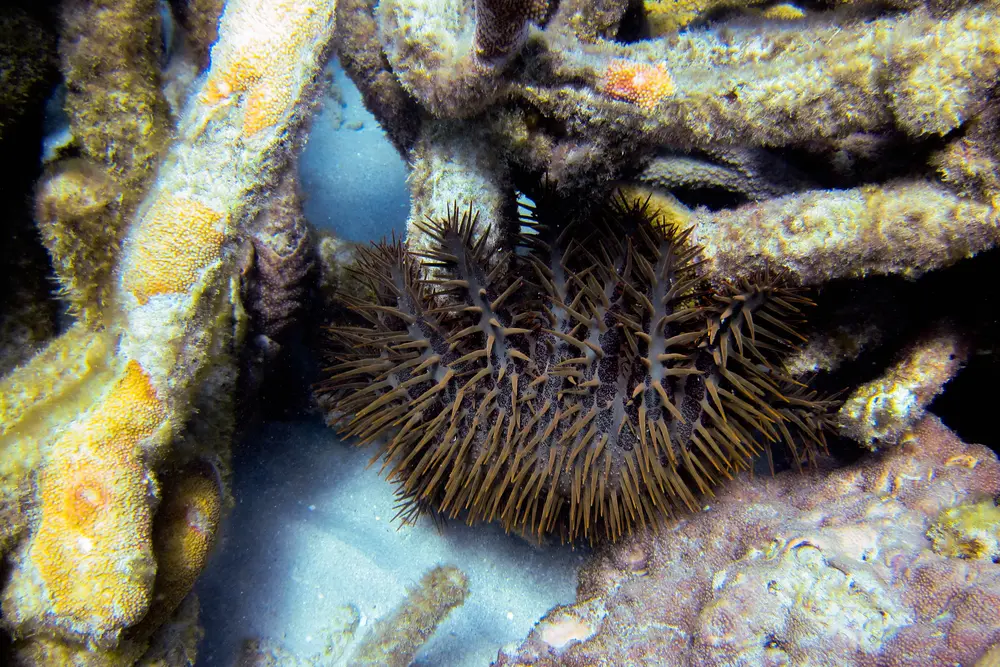
A fresh crown-of-thorns feeding scar and a bleached coral can both look white, but the edge, remaining tissue and wider reef pattern tell different stories.
Read article →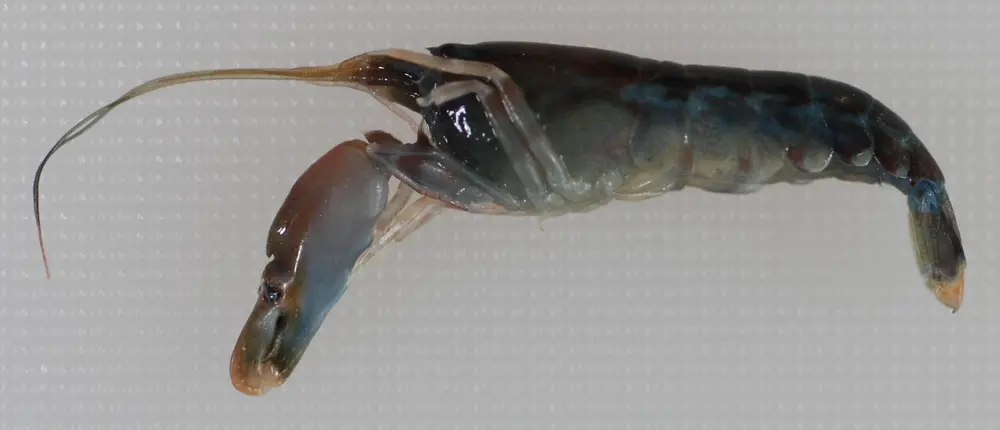
The reef's dry crackle begins with a hidden shrimp closing one outsized claw—but the sound comes from a collapsing bubble, not two hard claw parts striking.
Read article →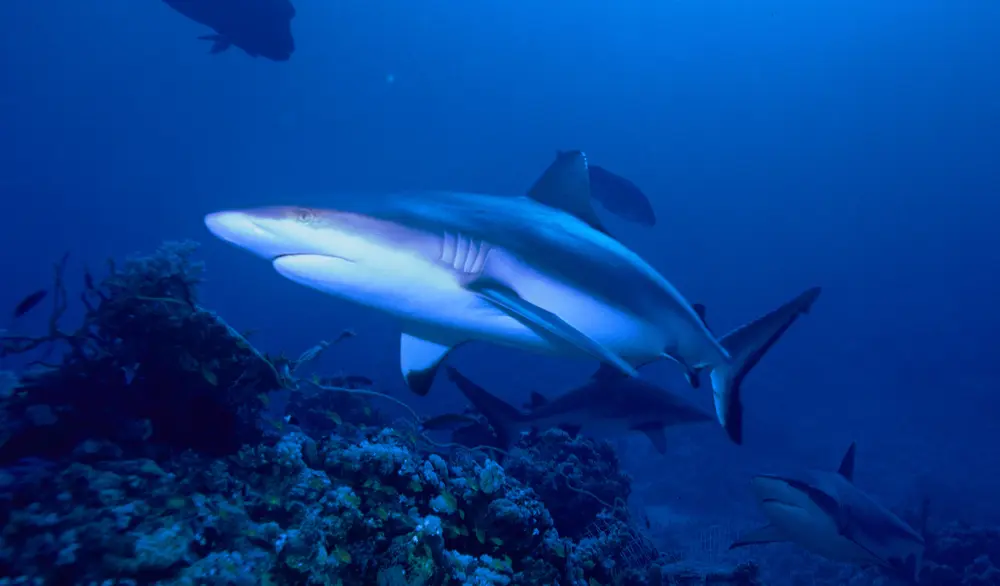
When a grey reef shark lowers both pectoral fins and stiffens into a hunched swim, read the whole sequence before deciding what it means—and give the shark more water.
Read article →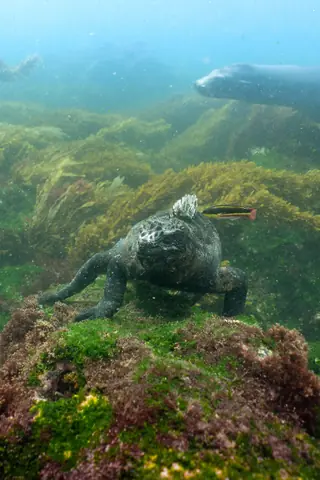
Follow a Galápagos marine iguana from algae-covered rock to a sunlit lava ledge: its route shows how cold water, body size and the tide shape where it feeds.
Read article →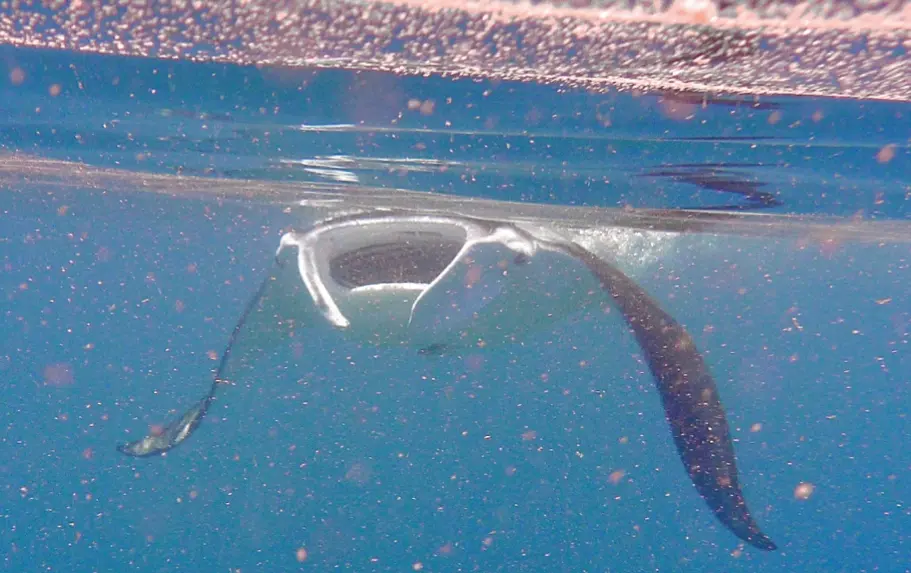
When a manta unrolls the two fins beside its mouth, follow what happens next: an open mouth and a repeated run, somersault or feeding chain reveal how the ray works a patch of plankton.
Read article →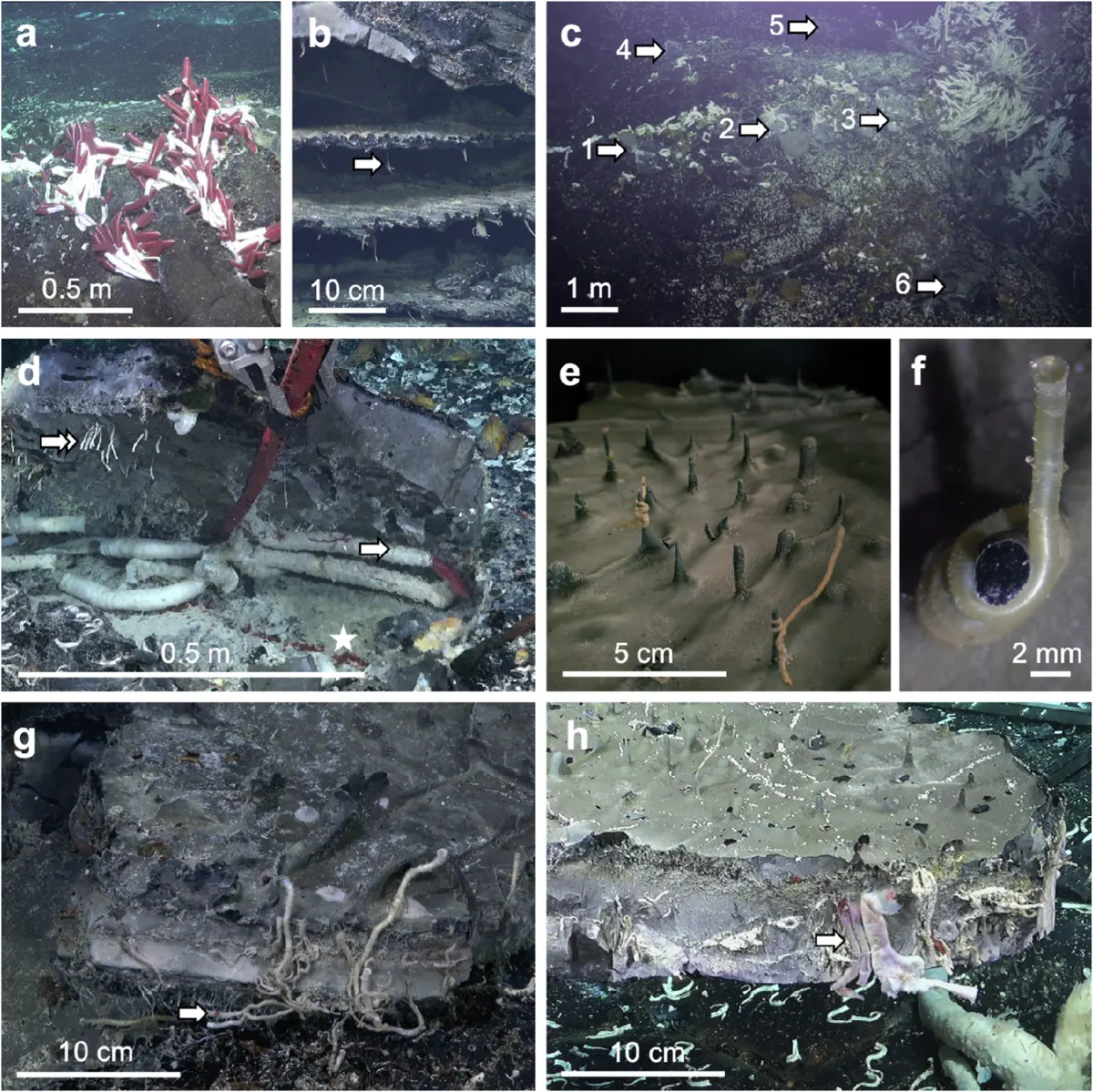
At 2,515 metres on the East Pacific Rise, watch ROV SuBastian lift a lava shelf: tubeworms, limpets and bristle worms occupy the warm cavity beneath what looked like solid seafloor.
Read article →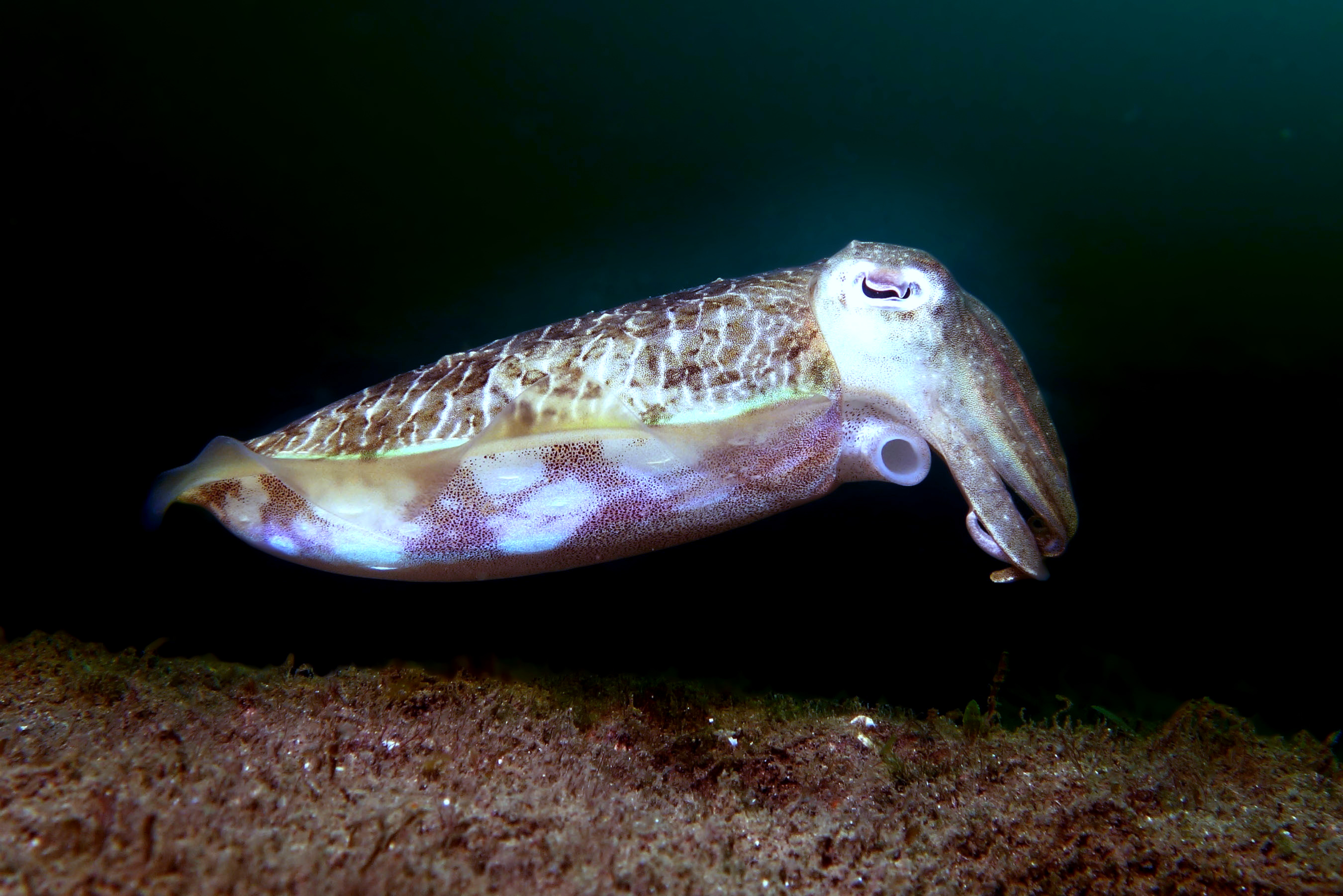
When three mourning cuttlefish gather, compare both sides of the smaller male: stripes may face the female while mottled camouflage faces the larger rival, turning one body into two messages.
Read article →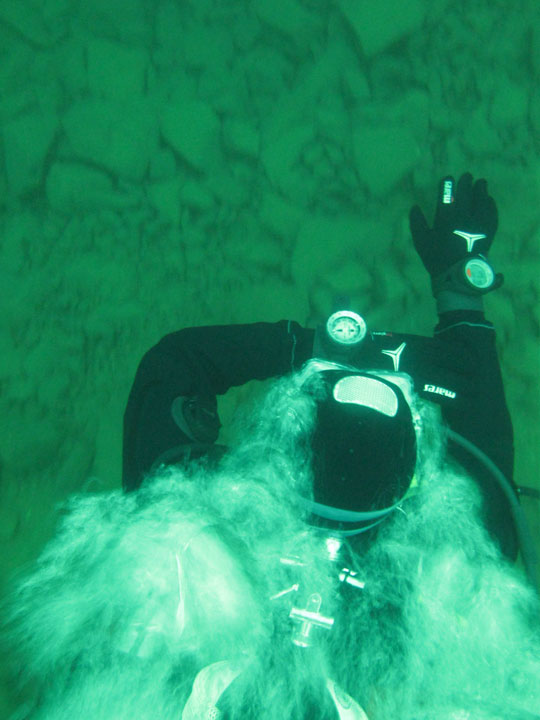
When the north arrow stays boxed but the exit drifts sideways, check whether the compass is level and what the current is moving—the dial shows heading, not your position.
Read article →
When a clear animal drifts past, watch for a pulsing bell, moving rainbow rows, or a squeezing barrel—the motion helps separate a jellyfish, comb jelly, and salp.
Read article →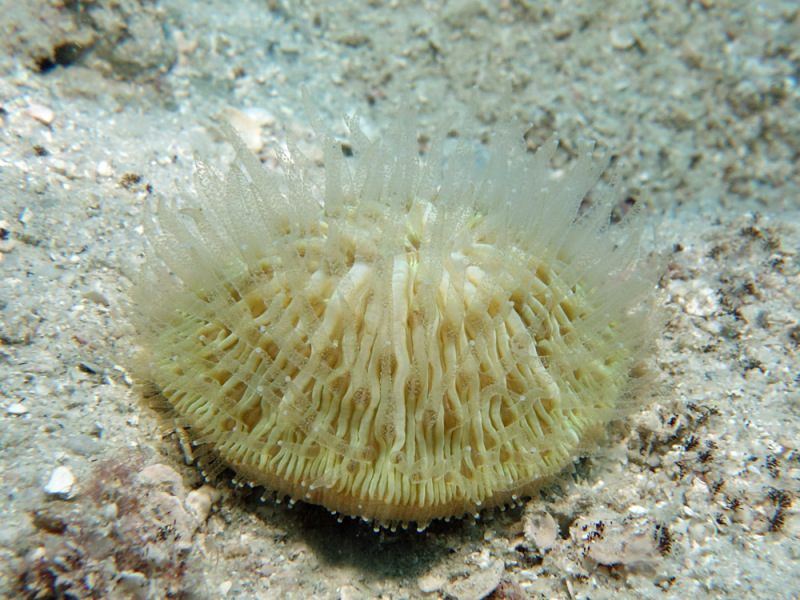
A small mushroom coral resting on sand can shift its whole body toward blue light, turning a seemingly fixed part of the reef into an animal whose position is worth watching.
Read article →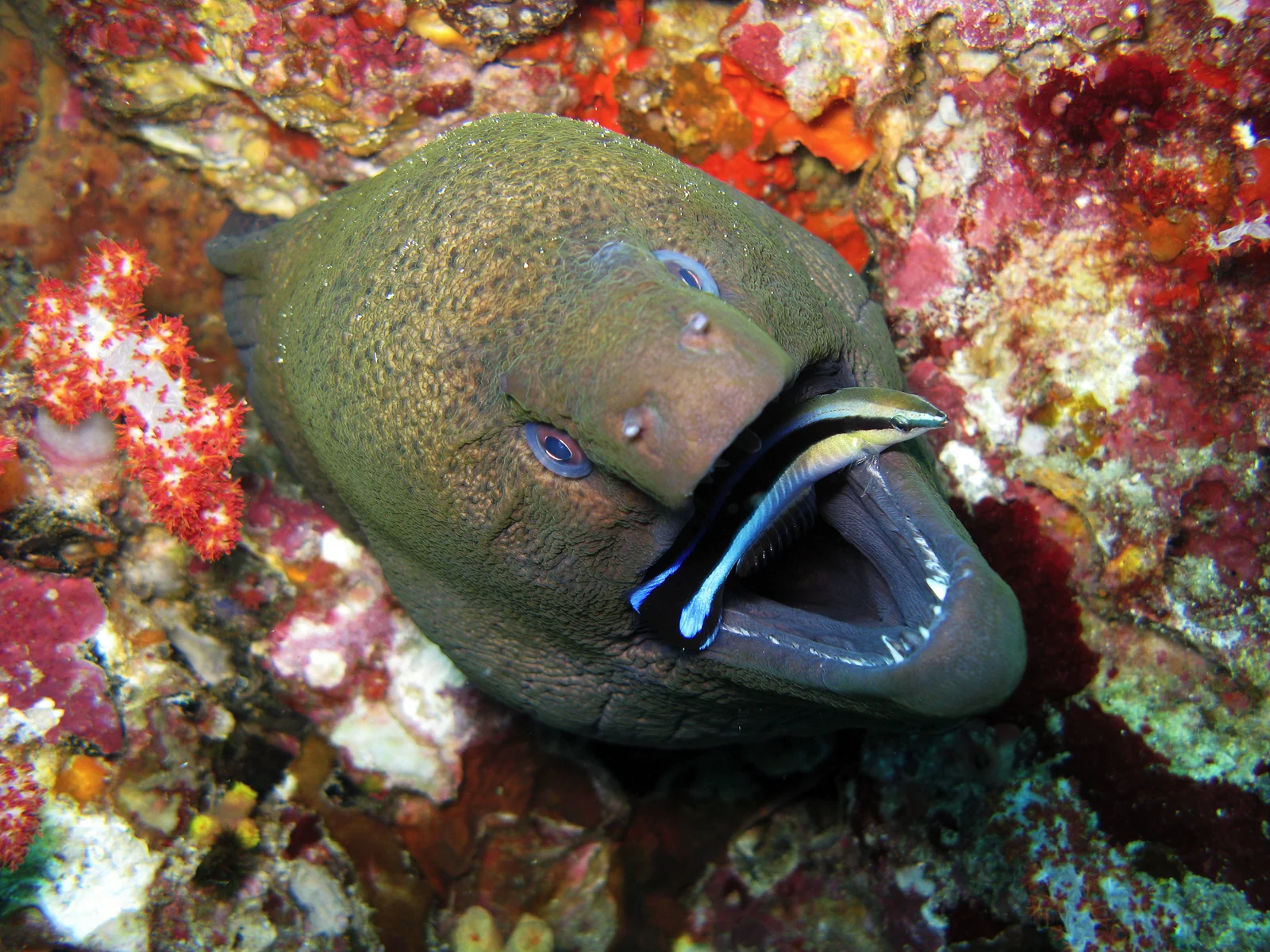
A reef fish holds still for a tiny cleaner wrasse, then jolts or gives chase—a brief exchange that reveals both the benefit of cleaning and the conflict over what gets eaten.
Read article →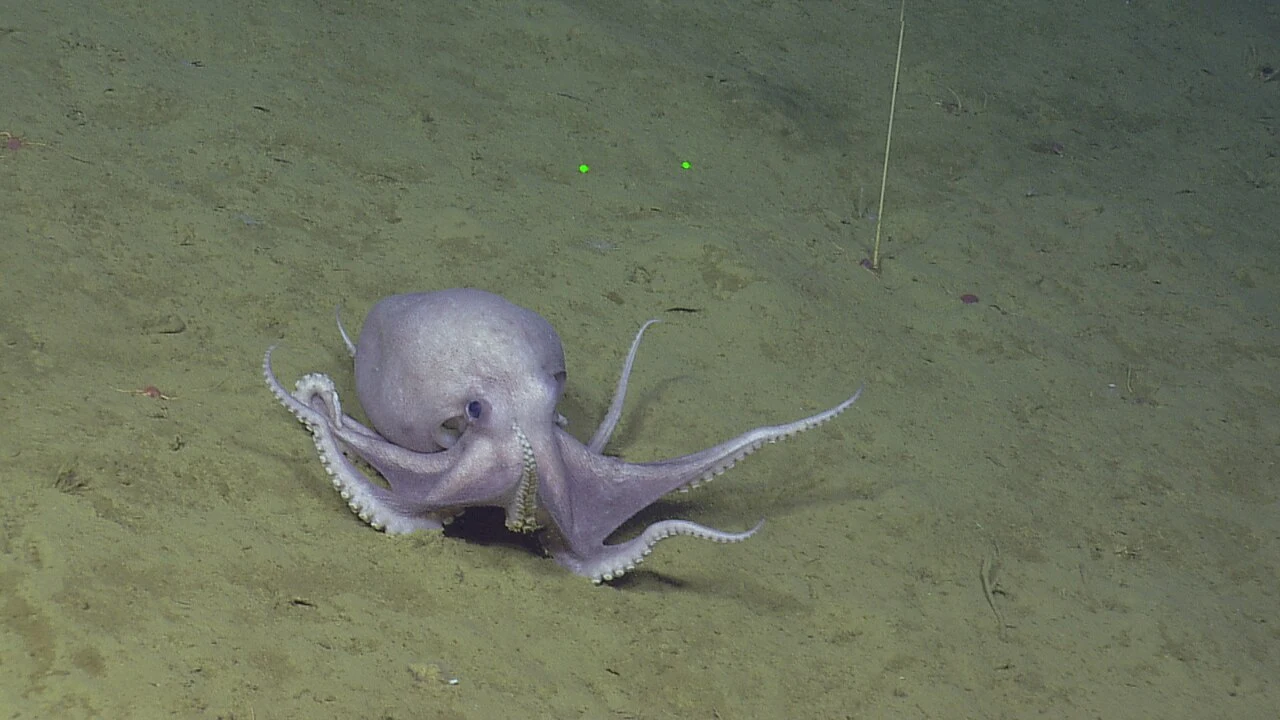
Beside an ROV camera 3,200 metres below California, look for pearl octopuses over shimmering warm cracks—a natural incubator that can shorten the wait for their eggs to hatch.
Read article →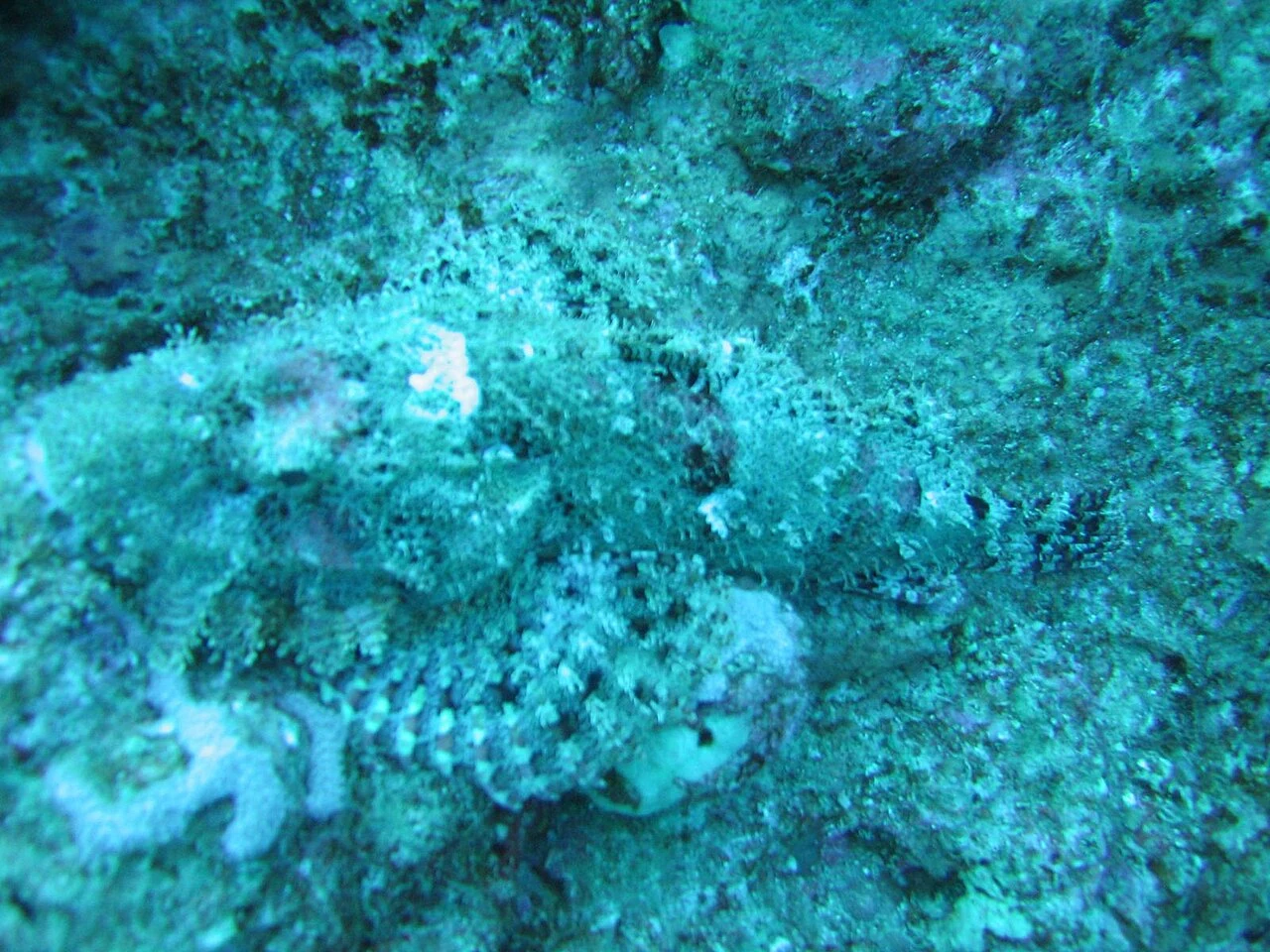
If a colourful reef turns blue in your photograph or a flash adds white specks, follow the paths that light travels to understand what distance, lighting and colour balance can change.
Read article →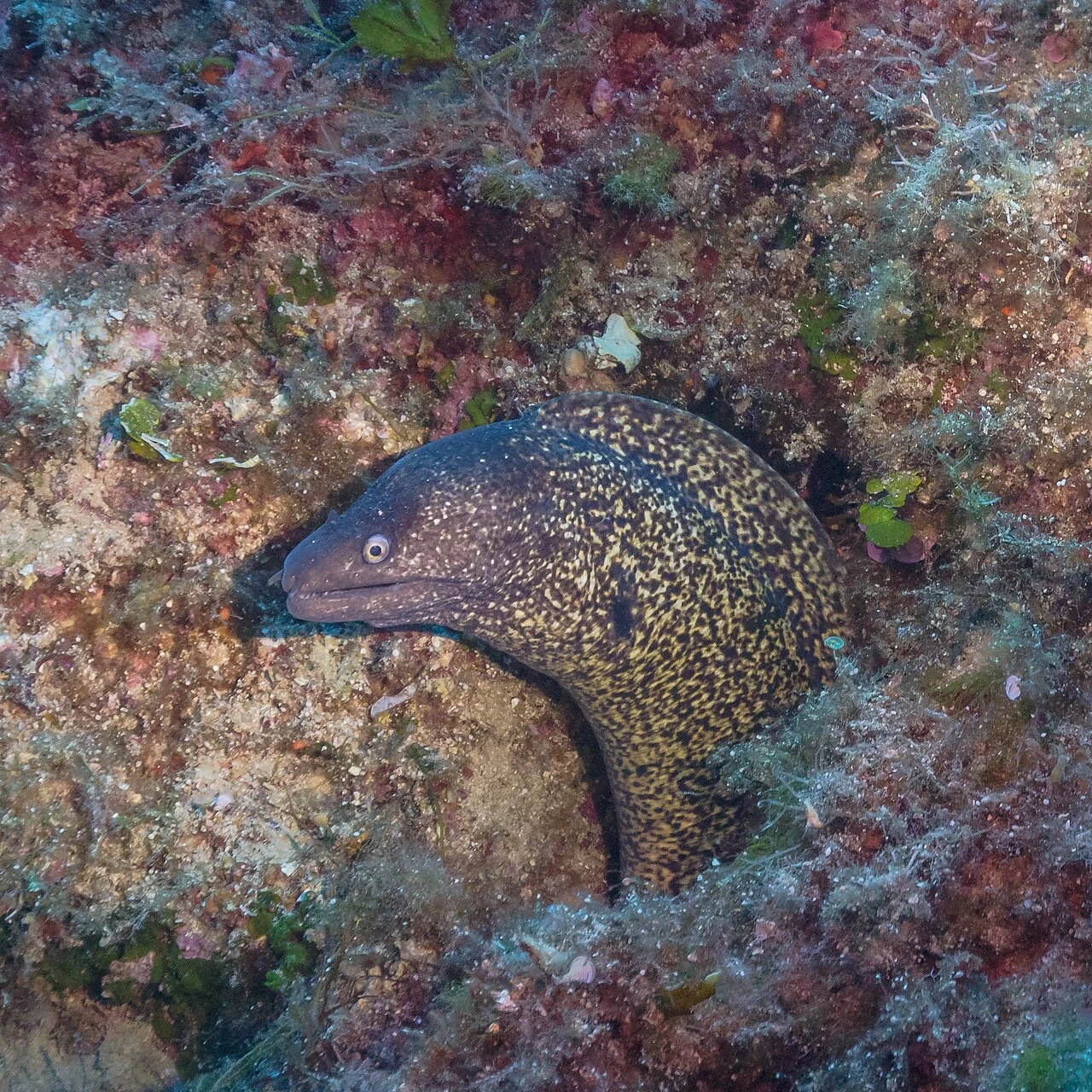
A moray’s front jaws pin its prey while a second set reaches forward inside the mouth to grip the meal and haul it into the throat—a hidden handoff behind the teeth you can see.
Read article →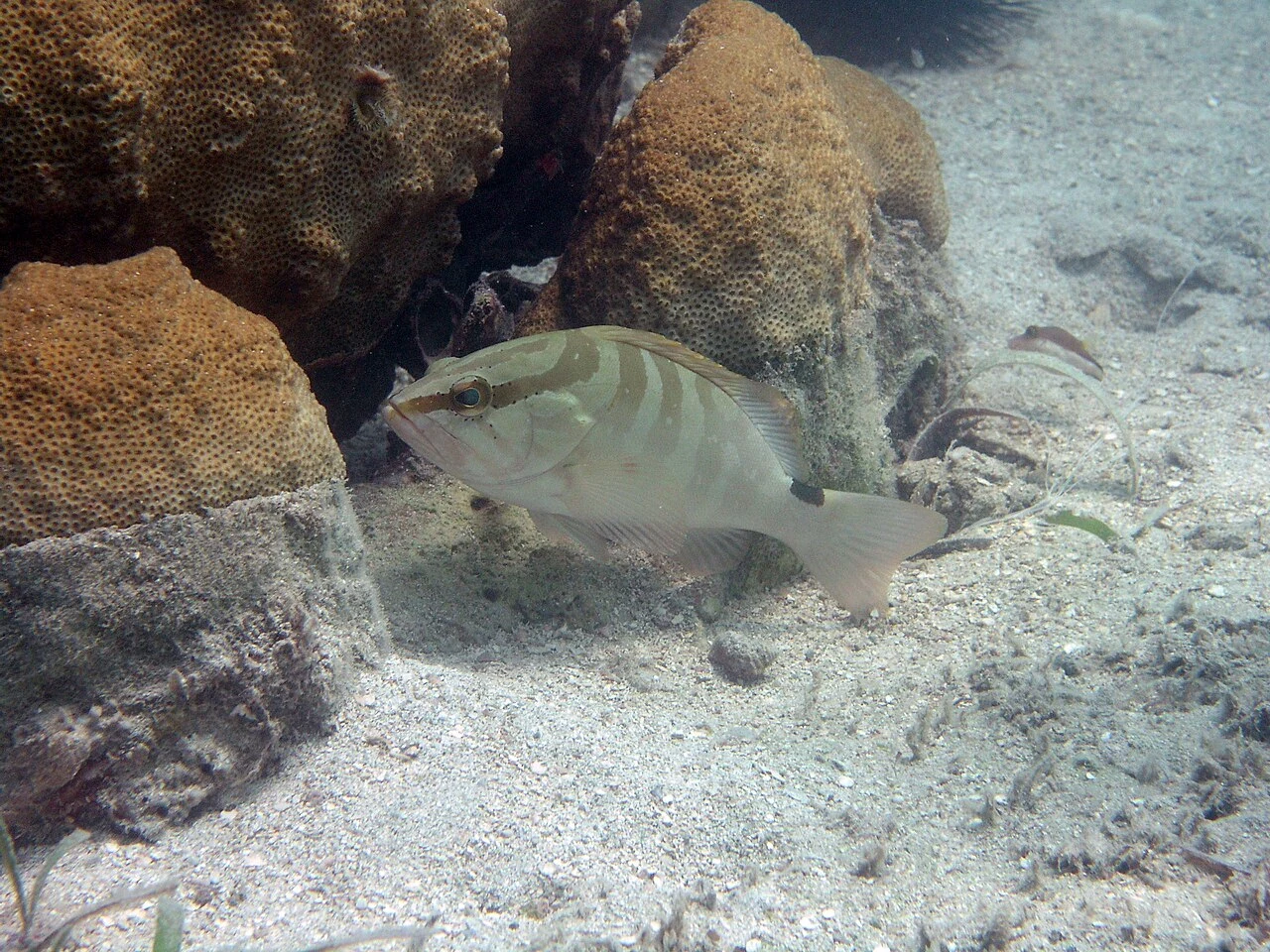
At Little Cayman’s winter grouper gathering, watch barred fish turn dark and pale before surging upward to spawn above the shelf edge.
Read article →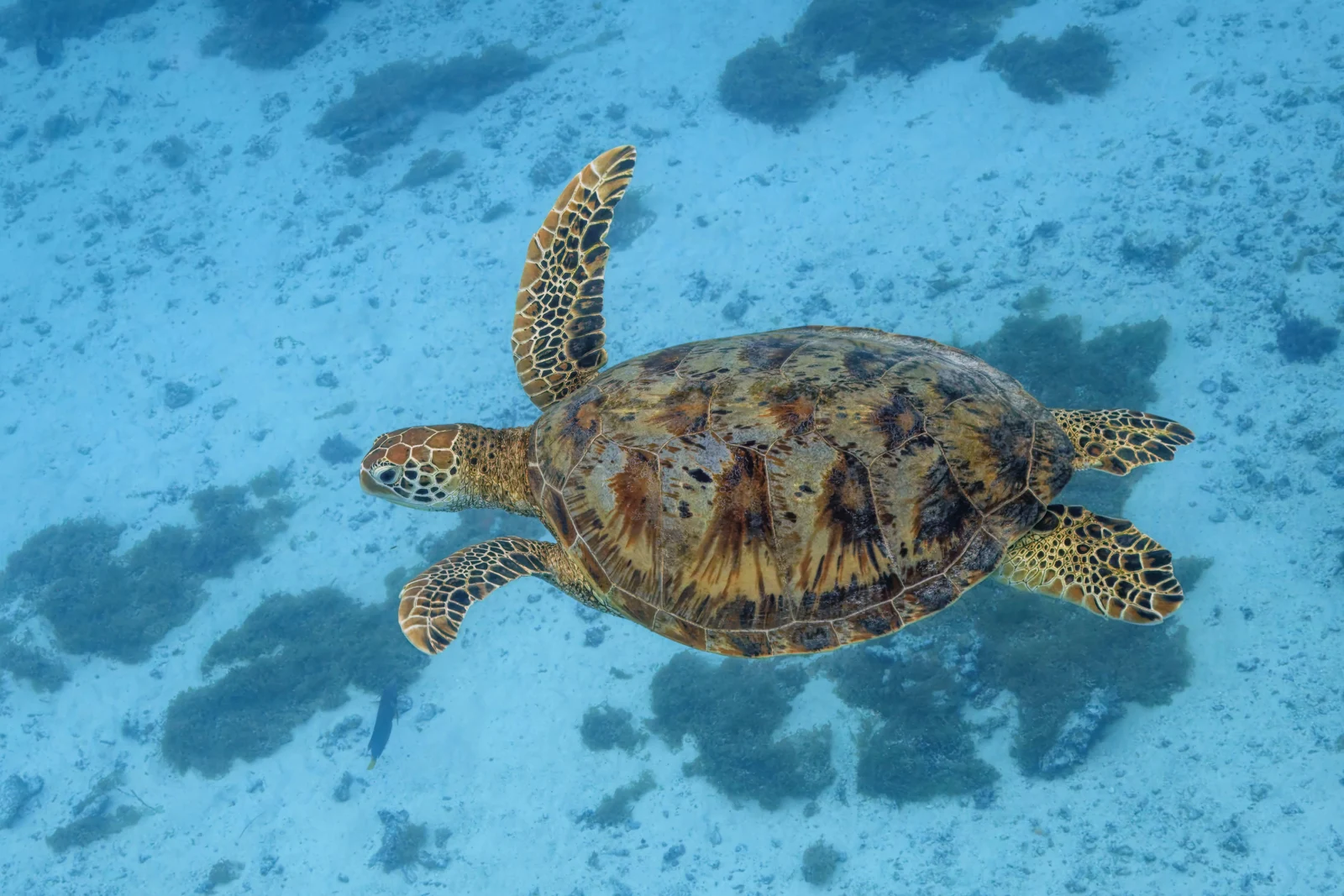
Watch a turtle’s head and the shell’s trailing edge for identification clues that often tell you more than the colour that first caught your eye.
Read article →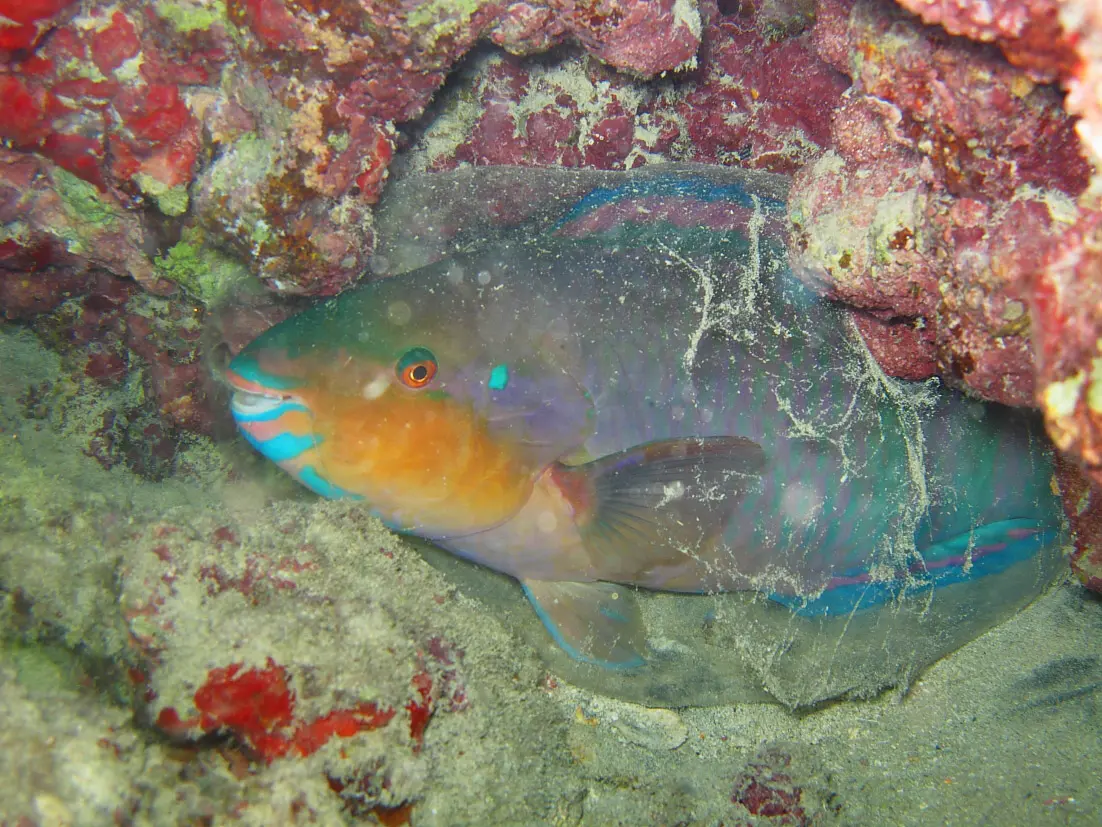
Catch the outline of a resting parrotfish’s clear envelope at the edge of your torch beam to see a shelter that helps keep tiny blood-feeders away.
Read article →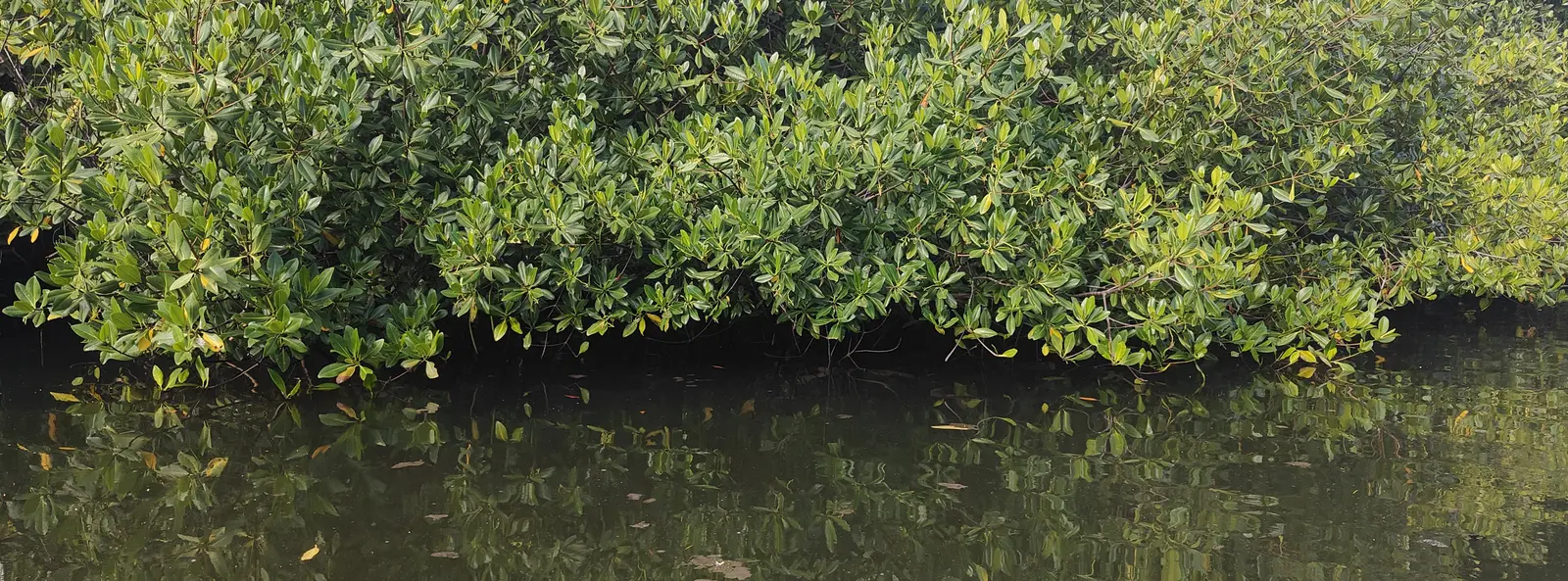
Look between Lac Bay’s mangrove roots and into the seagrass beside them to see the different hiding places young snappers and parrotfish use before many move onto the reef.
Read article →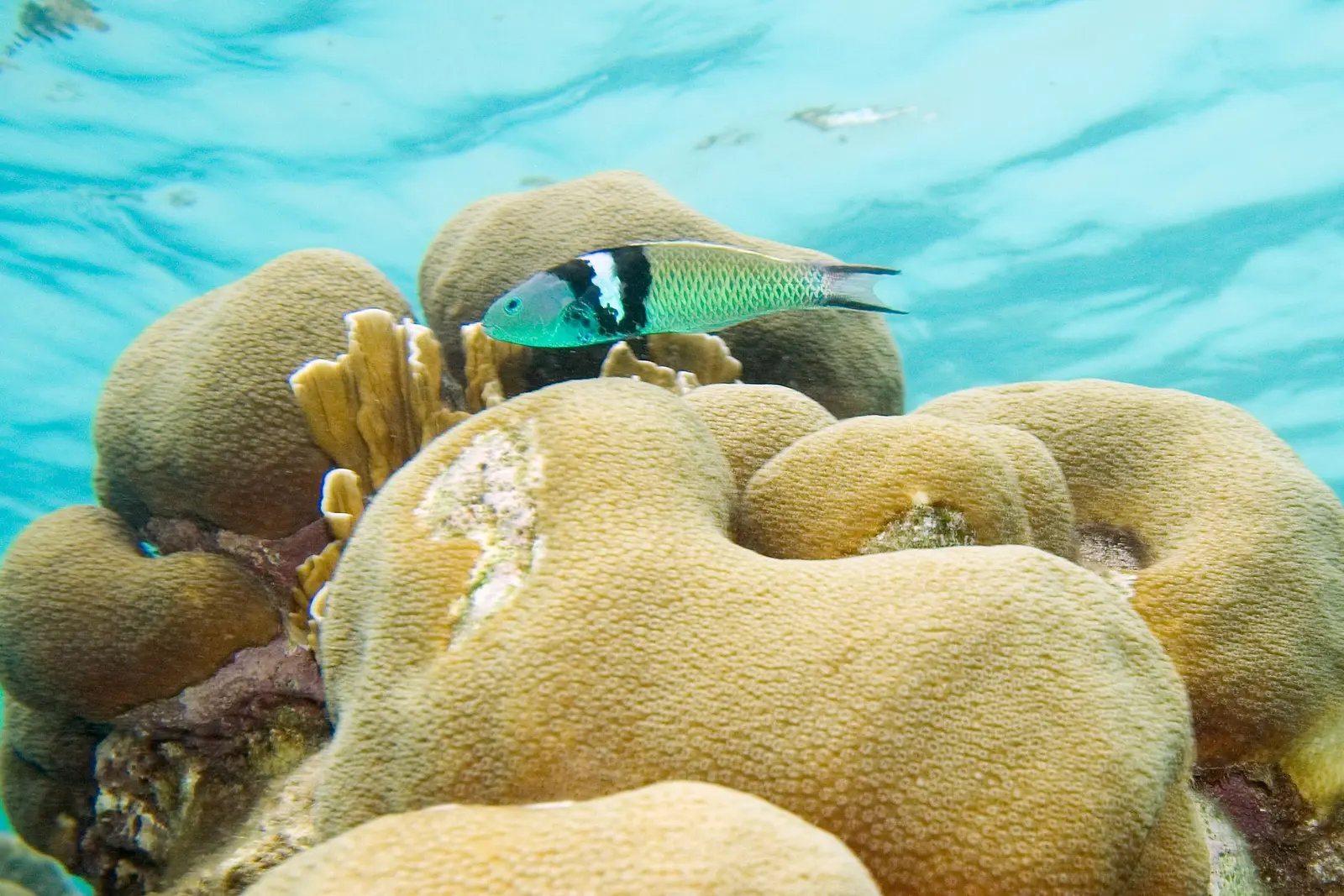
Watch who chases and courts after a dominant bluehead wrasse disappears: the largest female can take over those roles before its body completes the change to male.
Read article →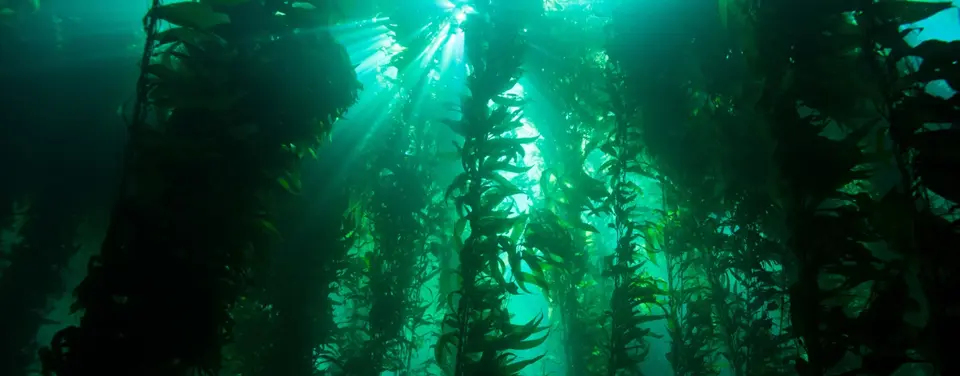
Otters hunt among the kelp beside an urchin-covered barren because a spiny shell on bare reef can contain very little worth eating.
Read article →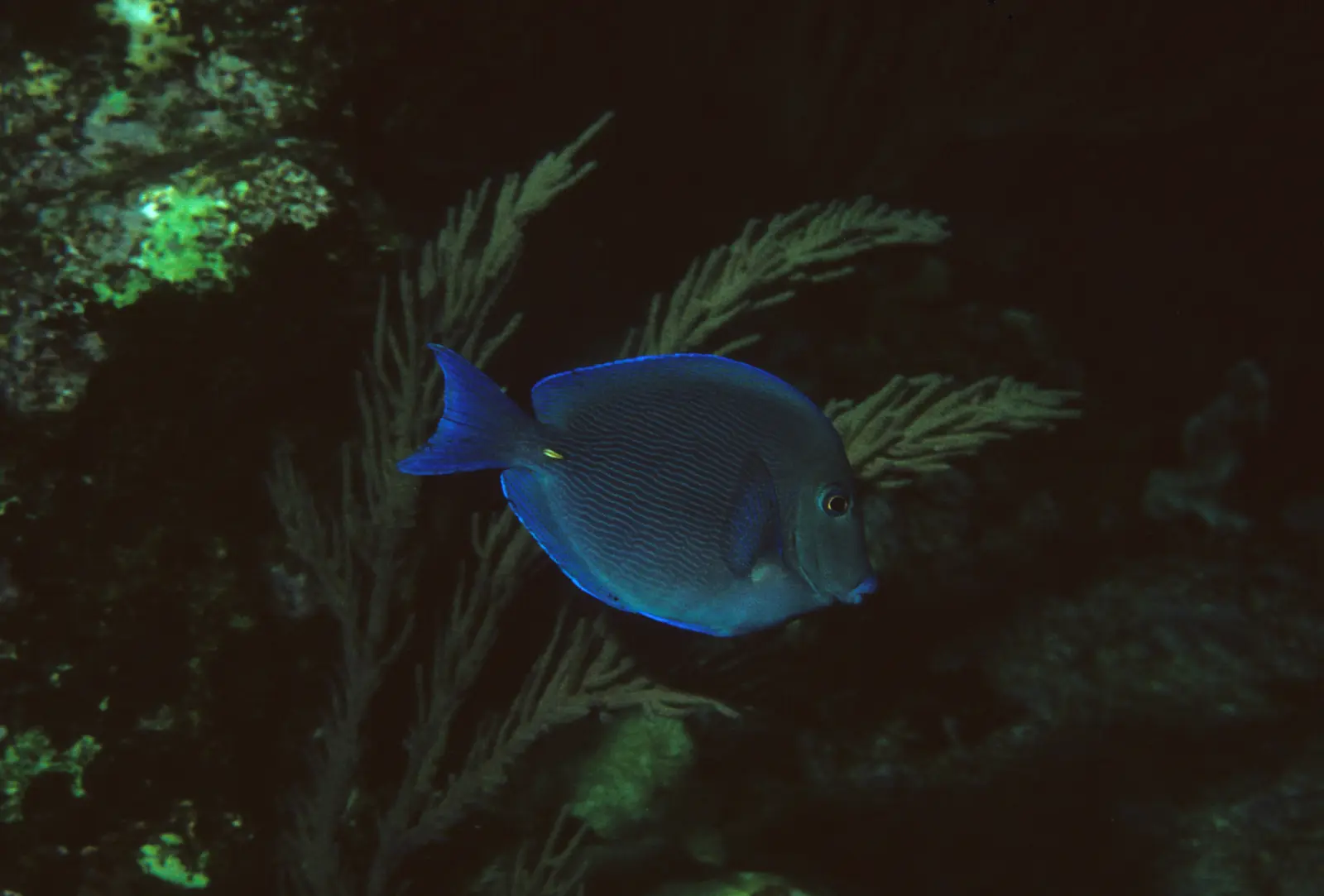
Watch a yellow juvenile blue tang return to its own patch of reef while blue adults raid a damselfish’s algae garden—their different feeding patterns reveal how the same species uses the reef as it grows.
Read article →Watch a green turtle’s beak, its route through the grass, and its next breath to distinguish feeding from resting during a Florida Keys encounter.
Read article →