Ocean discoveries
An Octopus Nursery in Warm Springs: Why Thousands Gather Deep Below California
Two miles below California, pearl octopuses brood over warm cracks in the rock. A faint shimmer marks a natural incubator that can cut years from the wait for their eggs to hatch.
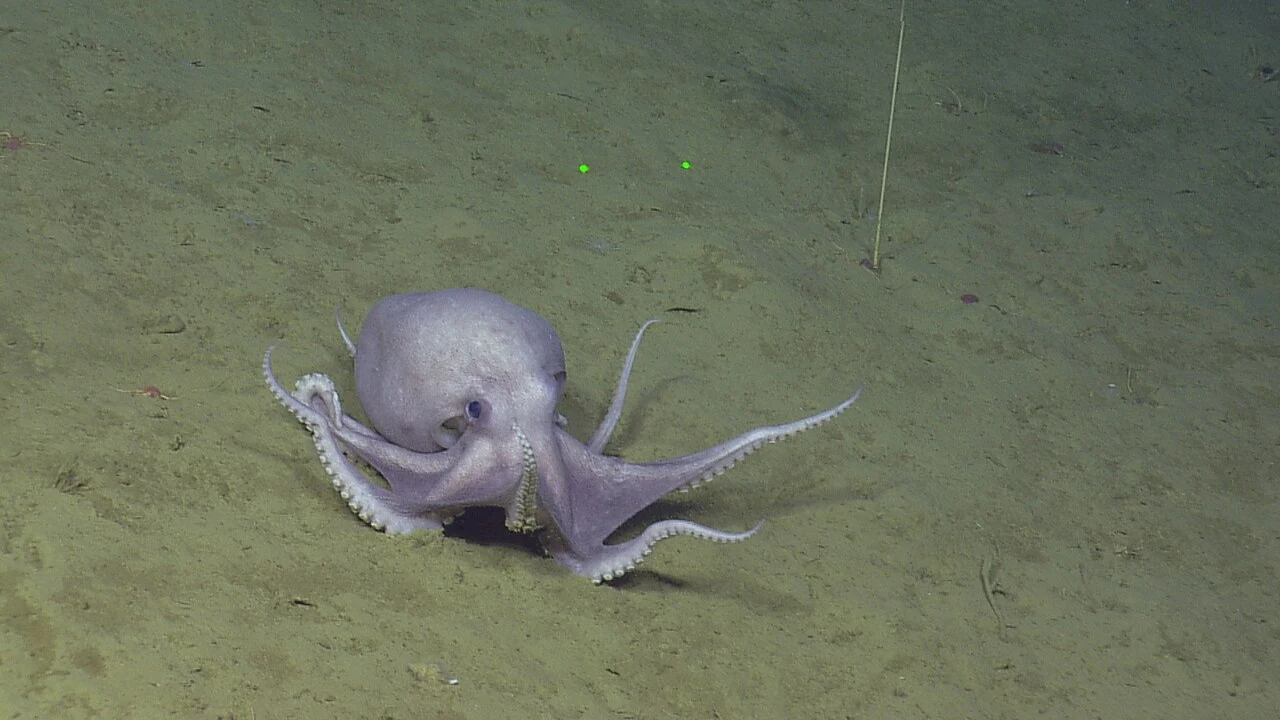
An octopus in the Davidson Seamount area, photographed during robotic exploration. This contextual image is not identified as a pearl octopus or a photograph of the Octopus Garden; view the nursery itself in the linked MBARI research footage.
Photo: Ocean Exploration Trust / NOAA, via National Marine Sanctuaries. Image source · CC BY 2.0. Resized and converted to WebP. No cropping, color changes, or content edits.
.jpg)
In Octopus Garden footage, look for pale mothers folded over their eggs and a faint shimmer warping the water above the rocks. The robot’s camera is about 3,200 meters down off California, where warmer water in those cracks helps pearl octopus eggs develop in under two years. 1 4
Just outside the warm nesting sites, the surrounding water is about 1.6°C. At that temperature, researchers estimated that the same species’ eggs would need at least roughly five to eight years to develop. The crowd is concentrated around a difference you can almost see: warmth rising through crevices, shortening a long, exposed wait on the seafloor. 4
A nursery near the mountain’s foot
Find Monterey on the California coast, then look offshore to Davidson Seamount, roughly 130 kilometers southwest of the city. The Octopus Garden lies on a small hill near the seamount’s base, about 3.2 kilometers down. It is not a hidden corner of Monterey’s shallow kelp forest, and the summit of the seamount is not the nesting site. 2
The view comes from robotic exploration, far below recreational diving. Artificial lights reveal the rock, the pale bodies, and the nearby water; beyond them, the scene falls back into darkness. As the camera moves, watch where the nests stop. The boundary of the crowd can be easier to pick out than the subtle flow that makes the nesting places different.
Davidson is an old underwater volcano whose rocky surfaces also support striking deep-sea communities. NOAA’s account of its exploration describes the seamount as a place where expeditions repeatedly found more to investigate. When researchers from NOAA and the Nautilus expedition encountered the octopus aggregation in 2018, the crowd itself became a clue to conditions that the rock alone had not advertised. 3
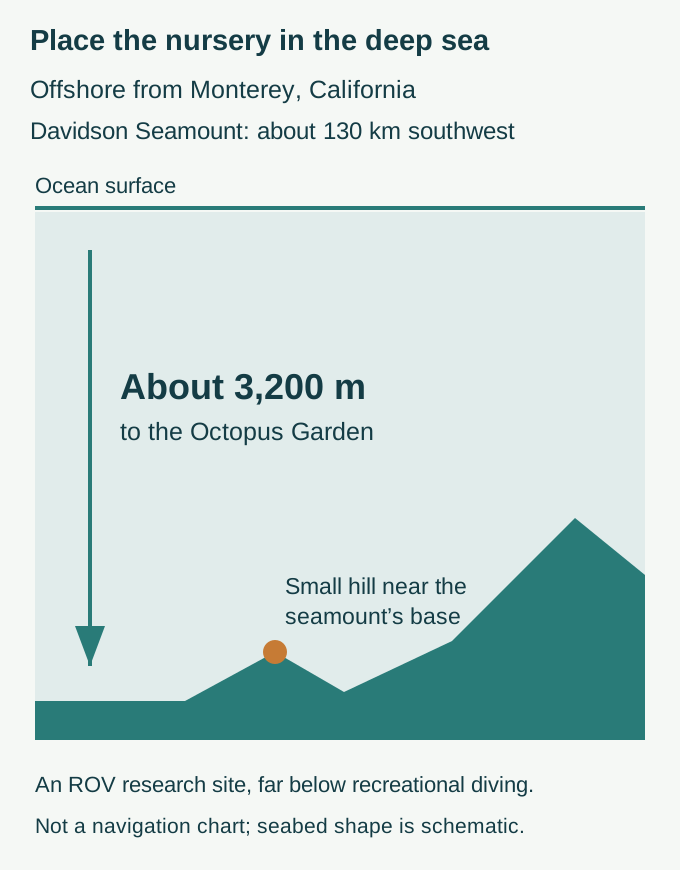
The Octopus Garden is a deep-sea research site near Davidson Seamount, not a recreational dive destination. This location-and-depth schematic is not a navigation chart or a measured seafloor profile. 2
Graphic: SeaLifeWiki. Research basis · Original SeaLifeWiki graphic. Original explanatory graphic; see caption for scope.
Read the posture before counting the crowd
In the nursery footage, many octopuses look like pale rounded bundles pressed into gaps in the rock. They are pearl octopuses, Muusoctopus robustus. Nesting females curl their arms upward around the eggs, exposing pale arms and suckers to the camera. The posture makes the animals look very different from the arm-spreading reef octopus a snorkeler might recognize. 1
Now watch for a change in the pattern. An animal moving across the bottom is doing something different from one holding a nest. An egg case is different evidence from an empty crevice. The research team documented adults, developing eggs, and hatchlings, but no intermediate-sized juveniles or feeding at the site. The combination identifies a place used for mating and brooding, rather than a year-round gathering of every life stage. 2
The scale is remarkable even without turning an estimate into a head count. Researchers counted about 6,000 octopuses in the surveyed portion; MBARI reported that the wider nursery might contain 20,000 or more. The larger number describes an extrapolation beyond the counted area. Either way, pause on one female instead of trying to absorb the crowd all at once. She is holding a position that matters for the eggs beneath her. 2
The faint shimmer is the important part of the scenery
Look close to the cracks occupied by the nests. Where warmer water mixes with colder water, the image can shimmer. That visual disturbance prompted a question a camera alone could not answer: how warm is it where the eggs are sitting? Researchers brought temperature instruments into the nests to find out. 1
The surrounding deep water measured about 1.6°C, while water bathing developing embryos averaged 5.1°C in the study. Some crevices reached roughly 10.8°C, but the warmth dropped toward ambient conditions within less than a meter of the nests. Follow the camera from a crowded crack into open water: a very small change of position can leave the warm setting behind. 4
The shimmer is subtle because these are mildly warmed springs, rather than towering mineral chimneys ejecting black plumes. Water emerges through cracks in the seafloor, with little suspended material to advertise its movement. The pale octopuses can draw the eye first; only the closer camera view reveals the wavering water above their nests. 4
For a diver used to following a reef’s edge, that is the familiar lesson hidden in the alien setting. A habitat boundary need not be a wall or a change of rock. Sometimes it is a difference in the water passing over the same surface. Here, instruments give a number to the difference the camera first hints at.
What warmer water buys an egg
An egg under a brooding female does not look busy. Its development nevertheless continues, at a rate influenced by temperature. The team used repeated observations of embryo stages to estimate a mean incubation period of about 1.8 years at the Garden. Tracking how long recognizable females occupied nests supplied a separate, broadly consistent estimate. 4
For eggs in the surrounding 1.6°C water, the team projected at least roughly five to eight years of development. That figure comes from temperature-and-development relationships, rather than an eight-year watch over a matching group of eggs. Keep that distinction beside the female in the footage: her warm nest supplied repeated observations, while the colder-water comparison remains an estimate. 4
A mother holding a nest must keep that brood through the developmental wait. Shortening it reduces the time eggs are exposed to threats, which is the proposed advantage of these warm sites. The benefit depends on conditions staying suitable for successful development. It is a particular warm refuge in cold water, not a race toward the hottest crack. 1
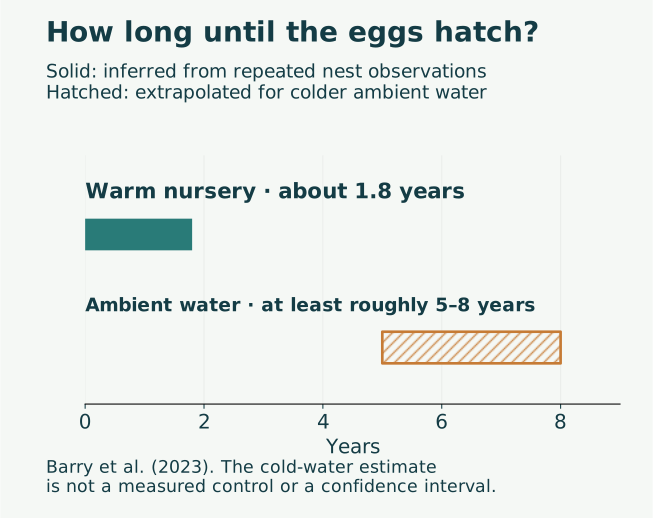
Different kinds of evidence: about 1.8 years from repeated observations at the warm nursery; at least roughly 5–8 years projected for ambient water. The latter is not a measured control group. 4
Graphic: SeaLifeWiki. Research basis · Original SeaLifeWiki graphic. Original explanatory graphic; see caption for scope.
An older Monterey observation shows what a long wait looks like
To appreciate the timescale, consider a different octopus watched elsewhere in the Monterey region. In research published in 2014, a female Graneledone boreopacifica guarded eggs on a rocky ledge around 1,400 meters deep for 53 months. This was another species at another site, not a pearl octopus used as the cold-water comparison for the Garden. 5
Researchers returned repeatedly and recognized the same female by characteristic scars. Over time, her condition deteriorated while the developing young became visible through the eggs. Eventually the mother was gone and the empty egg cases remained. Repeated visits turned a motionless-looking scene into a record stretching across more than four years. 6
A single frame could never carry that story. When watching nursery footage, imagine the date changing while the camera returns to the same patch of rock. The key event may be an embryo becoming more developed, a nest becoming vacant, or a hatchling leaving the frame. At deep-sea temperatures, a patient observer sometimes needs a calendar rather than a longer video clip.
The nest remains busy after its occupant is gone
Look around the brooding octopuses rather than treating everything else as background. Anemones, shrimp, snails, and fishes share the area. MBARI describes the nursery as supporting a broader community: octopuses that die after breeding become food for other animals. The crowd brings material into a deep environment where food is often sparse. 1
The image therefore contains overlapping stories. A pale bundle is a mother sheltering eggs; a nearby scavenger may be waiting for a meal; an empty space can become another nesting place. What looks like a static carpet of octopuses is a changing set of occupants and opportunities.
Resist deciding what every nearby animal is doing from one still. A fish passing a nest has not necessarily attacked it, and a shrimp beside an egg has not necessarily eaten it. Watch for contact and its outcome. The same discipline that makes a reef sighting more interesting also makes deep-sea footage more informative.
Carry three questions into the next view
First, where does the crowd begin and end? Follow the crevices rather than just the animals. Second, what changes when the camera moves close: shimmer, eggs, posture, a hatchling? Third, which part of the explanation comes from a measurement that the picture cannot supply? Those questions turn a remarkable video into a place you can begin to read.
Visit the MBARI Octopus Garden project for footage of the actual nursery, then return to the Monterey Bay map for the region’s accessible coastal habitats. Keep the two scales distinct: a kelp-forest dive and an abyssal research expedition reveal different parts of the same ocean region.
The next time you find several reef animals packed into one small patch, pause before swimming on. You may not discover a thermal spring. But the question that opened this deep-sea mystery—what is different about this particular place?—is a useful one anywhere you put your face in the water.
Sources & further reading
- MBARI — Octopus Garden project and footage — The actual nursery, brooding posture, spring-water clues, and associated community.
- MBARI (2023) — Why thousands of octopus migrate to deep-sea thermal springs — Location, depth, survey context, and the distinction between counted and estimated abundance.
- NOAA Sanctuaries — Davidson Seamount: oasis in the deep — Exploration history and the broader seamount setting.
- Barry and colleagues (2023) — Abyssal hydrothermal springs: cryptic incubators for brooding octopus — Original study: mean nest temperature, repeated observations, and explicitly extrapolated ambient-water incubation.
- MBARI (2014) — Deep-sea octopus broods eggs for over four years — A separate 53-month observation of Graneledone boreopacifica in Monterey Canyon.
- Robison, Seibel & Drazen (2014) — Deep-sea octopus exhibits the longest-known egg-brooding period of any animal — Original repeated observations of the separate Monterey Canyon female.