
Ray
Reef manta ray
Mobula alfredi
Coastal reefs, cleaning stations, and plankton-rich bays
Find locations for this species ↓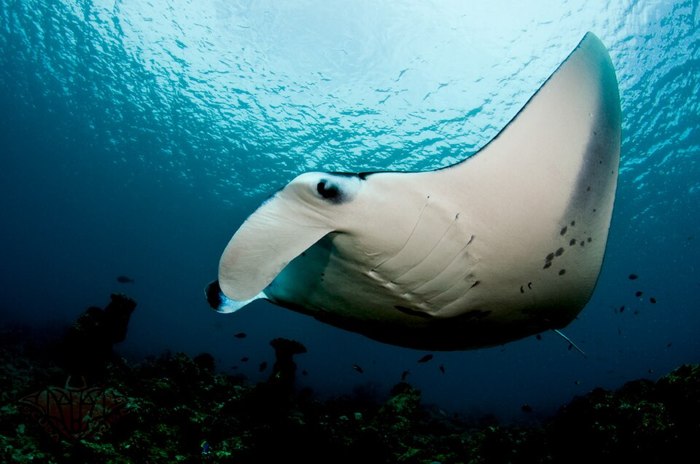
Photo: Shiyam ElkCloner · CC BY-SA 3.0 · Source and license. Displayed as a resized crop. Photograph illustrates the species.
- Habitat
- Coastal reefs, cleaning stations, and plankton-rich bays
- Viewing zone
- Surface–30 m
- Viewing activities
- Snorkeling · Scuba diving
RECORDED PRESENCE
Where has Reef manta ray been recorded?
These destination links use the same area and date cutoff as the map: 40 km circles, except for the four named regional rectangles. Checked 2026-09-19. Counts describe source records, not individual animals or sighting odds.
HawaiʻiHawaiʻi, United StatesRegional rectangle · 412 source records since 2016About this destination →Kona CoastHawaiʻi, United States40 km radius · 319 source records since 2016About this destination →MaldivesMaldives40 km radius · 23 source records since 2016About this destination →MauiHawaiʻi, United States40 km radius · 10 source records since 2016About this destination →PalauPalau40 km radius · 15 source records since 2016About this destination →